Super Bowl 2026 and the Future of Concussion Recovery: Why Brain Injury Is Also a Metabolic Injury
Super Bowl 2026: Performance, Collision, and Brain Health
Super Bowl 2026 represents the highest level of collision sport performance. It also highlights one of the most complex challenges in modern sports medicine: concussion and mild traumatic brain injury.
Despite advances in equipment design, rule changes, and sideline protocols, brain injury remains a major clinical and research priority across football and other contact sports.
Traumatic brain injury is not a niche problem. It is a major public health burden. In the United States alone, approximately 2.87 million TBI related emergency visits, hospitalizations, and deaths occur annually, representing roughly a 53 percent increase compared to the previous decade. In military populations, approximately 500,000 service members have sustained TBI over the past 20 years.

Patient Education: Understanding Concussion and Recovery
What Is a Concussion?
A concussion is a type of mild traumatic brain injury caused by a blow, hit, or rapid movement of the head that disrupts normal brain function.
Importantly, many concussions do not involve loss of consciousness. Symptoms may appear immediately or develop over hours to days.
Common symptoms can include:
- Headache
- Brain fog or slowed thinking
- Dizziness
- Light sensitivity
- Sleep changes
- Mood changes
- Memory difficulty
Every concussion is different. Recovery timelines vary from days to weeks, and sometimes longer.
The Modern Understanding: Concussion Is Also a Metabolic Injury
Modern concussion research is shifting from purely structural models toward neurometabolic models.
Following head impact, research shows disruption across multiple physiologic systems including:
- Cellular energy production
- Neurotransmitter signaling
- Inflammatory cascade activation
- Oxidative stress pathways
- Blood brain barrier stress
Researchers are increasingly studying nutritional and metabolic strategies that may support these pathways both before and after injury.
To improve patient functional outcomes, one promising avenue that has increasingly drawn attention is the design of TBI specific supplementation and dietary protocols. Emerging evidence from experimental trials and systematic reviews suggests certain micronutrients and biological compounds may help support recovery by targeting neuropathological mechanisms such as inflammation and oxidative stress.

Human Clinical Research Is Already Expanding
Contrary to common belief, this field is not limited to theory or animal models. Human clinical trials now span multiple populations.
Published trials include athlete cohorts, large adult metabolic and cognition cohorts, and longitudinal observational cohorts with more than one thousand participants.
Intervention trials evaluating metabolic and recovery related compounds include pediatric severe TBI populations, chronic mild TBI veteran populations, and acute concussion trials in adolescent and young adult athletes.
Compounds currently under clinical investigation across the field include creatine monohydrate, branched chain amino acids, riboflavin, choline, magnesium, and other nutrients involved in cellular energy and neurologic recovery pathways.
Vitamin D Status: An Often Overlooked Factor
An additional critical consideration is vitamin D status.
Retrospective research in TBI patients has demonstrated improvements in cognitive measures following vitamin D supplementation, particularly in patients who were deficient at baseline.
Vitamin D has a strong safety profile and is relatively easy to administer. For individuals at high risk of TBI, maintaining adequate vitamin D status may be clinically relevant, especially in populations with limited sun exposure.
In professional and collegiate football athletes, studies have shown high rates of vitamin D insufficiency, with lower vitamin D levels associated with increased injury risk. Monitoring vitamin D status and supplementing when clinically indicated is often recommended as part of a broader athlete health strategy.
What Patients Can Do to Support Recovery
Patients often ask what they can control during recovery. Evidence supported recovery behaviors include:
- Prioritizing sleep consistency
- Staying hydrated
- Maintaining stable blood sugar with balanced meals
- Avoiding alcohol during recovery
- Following graded return to activity guidance
- Communicating symptom changes to care team
These factors help support overall recovery physiology.
Why Cellular Energy Is a Major Focus Area
One of the most consistent physiologic findings after concussion is disruption in brain energy metabolism.
Creatine has been studied for its role in maintaining ATP availability in tissues with high and fluctuating energy demands, including brain tissue. Clinical studies in TBI populations have demonstrated improvements in functional recovery markers when creatine was included as part of recovery protocols.

Amino Acids and Neurotransmitter Recovery Pathways
Amino acids are being studied for their role in neurologic recovery because of their involvement in neurotransmitter synthesis and signaling.
Randomized trials evaluating amino acid protocols have demonstrated associations with improved cognition markers, reduced concussion symptom burden, and improved sleep disturbance metrics across severe, chronic mild, and acute concussion populations.
The Importance of a Whole System Recovery Model
Scientific evidence increasingly suggests nutritional compounds and dietary supplements may act as biochemical and physiologic support tools in the prevention and recovery phases of TBI.
However, supplementation is most effective when included as part of a broader holistic recovery framework including:
- Pre impact metabolic and health assessments when possible
- Temperature regulation
- Sleep optimization
- Blood glucose stability
- Early, medically guided return to activity
The Future Direction of Concussion Care
Super Bowl 2026 reflects how far athletic performance science has advanced. Concussion science is advancing alongside it.
The next era of concussion management will likely be multi layered and systems based, including:
- Advanced diagnostics
- Load and exposure management
- Neurometabolic monitoring
- Targeted rehabilitation
- Metabolic and recovery optimization strategies
Not single interventions.
Where Metabolic Recovery Fits Into Performance Medicine
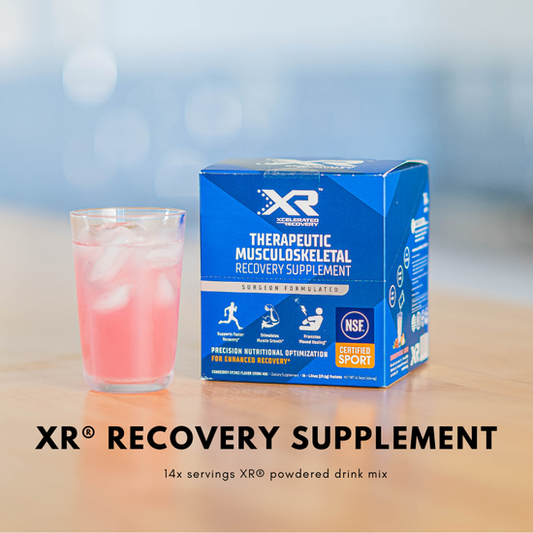
At Xcelerated Recovery, formulation philosophy is built around:
- Metabolic readiness
- Amino acid driven recovery signaling
- Cellular energy availability
- System wide recovery physiology
Because recovery is not isolated to one tissue or pathway. It is systemic.
Xcelerated Recovery is currently collaborating with professional teams across multiple high risk contact sports including football, MMA, combat sports, and soccer to help refine recovery protocols, support research initiatives, and contribute to the development of evidence informed recovery models.

Final Perspective: Super Bowl 2026 and the Next Era of Brain Health
The Super Bowl represents peak performance. It also represents the responsibility to continue improving athlete safety and recovery science.
The future of concussion care will likely combine structural, neurologic, and metabolic recovery models.
- Brain injury is complex.
- Recovery science is evolving.
- Metabolic health is becoming part of that conversation.
Emerging prophylactic and therapeutic protocols combining targeted nutrition with synergistic recovery modalities are shaping the future of TBI management.
Reference:
Review: Mitigating Traumatic Brain Injury: A Narrative Review of Supplementation and Dietary Protocols. Federica Conti et al, Nutrients 2024, 16, 2430. https://doi.org/10.3390/nu16152430